
Monitor Temperature Warehouse is a web application designed to monitor temperatures across different areas of a pharmaceutical warehouse.
The client uses sensors installed in several storage areas. These devices continuously measure temperatures and send the data to a cloud platform. The application then retrieves this data through an API and displays it in a clear, simple and usable interface.
The goal is to help teams quickly monitor sensitive areas, detect temperature deviations and react faster when an anomaly occurs.
Every area monitored, every deviation detected, every alert tracked.
In a pharmaceutical warehouse, some areas must remain within precise temperature ranges to ensure proper product preservation.
Medicines, sensitive products or temperature-controlled items can be affected by threshold deviations. An undetected variation can lead to quality risks, product losses or non-compliance.
Before the application was implemented, temperature data was available in a cloud system, but it was not always easy to use day to day. The project therefore centralizes the information in a clearer business interface for internal teams.
A dashboard makes it possible to quickly view all monitored areas and their current status.
Teams can immediately identify compliant areas, monitored areas and areas in alert.
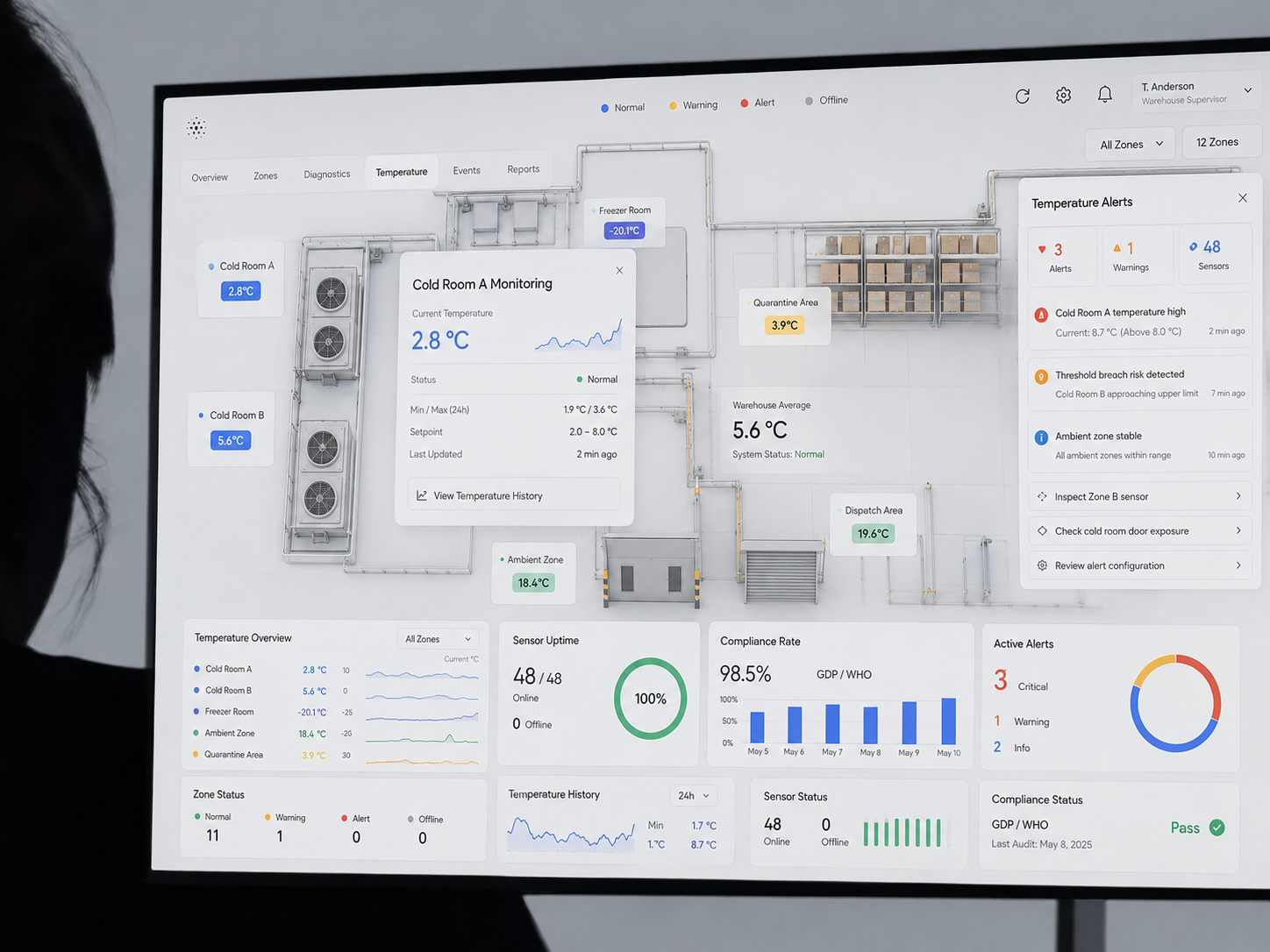
Each sensor is linked to a specific warehouse area. The application displays the latest received measurements, the area status and useful tracking information.
This makes it easy to quickly understand where the problem is when a temperature leaves the authorized range.
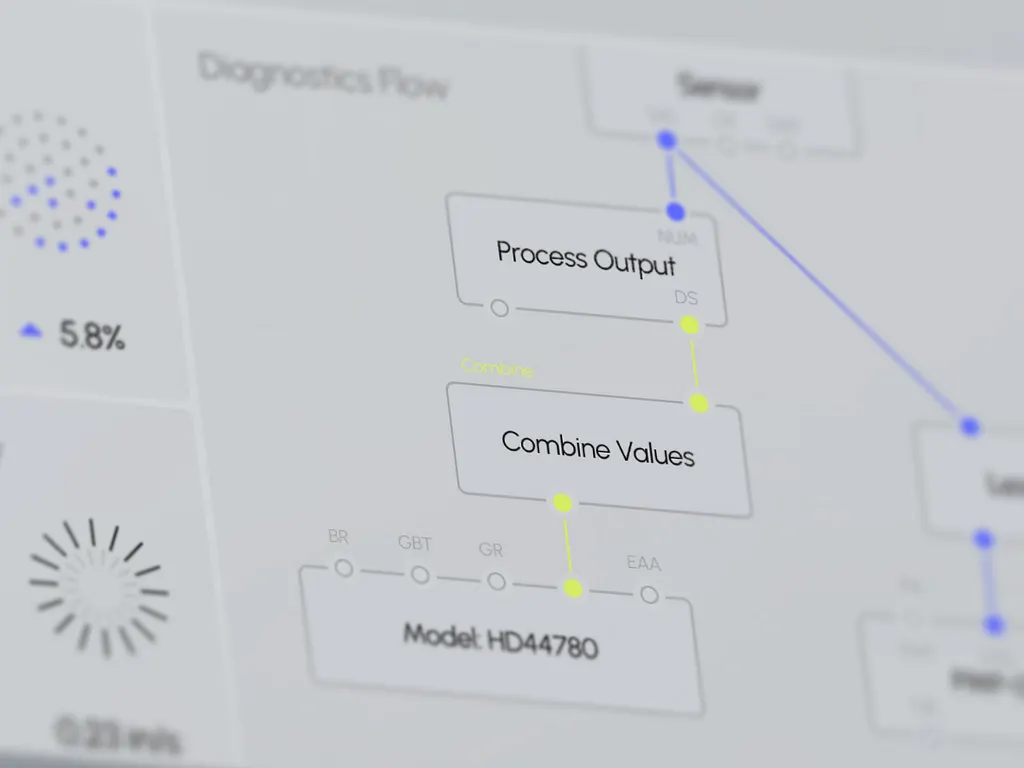
The application makes it possible to consult temperature history to analyze variations over time.
This view is useful to verify area stability, document an incident or support quality analysis.
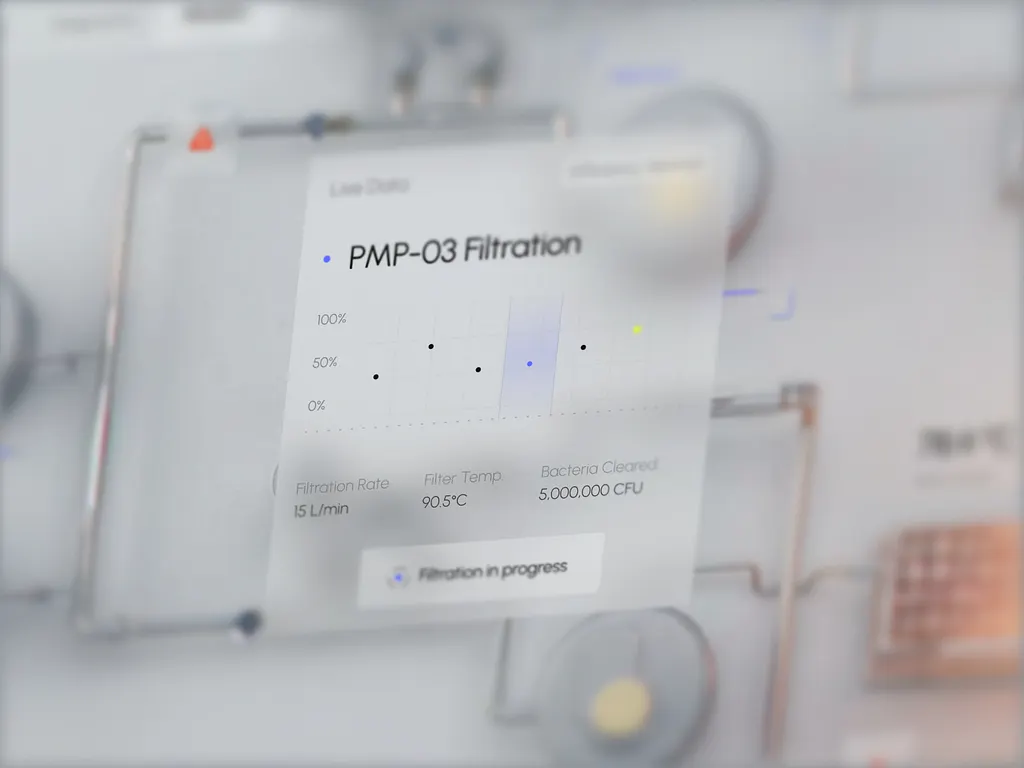
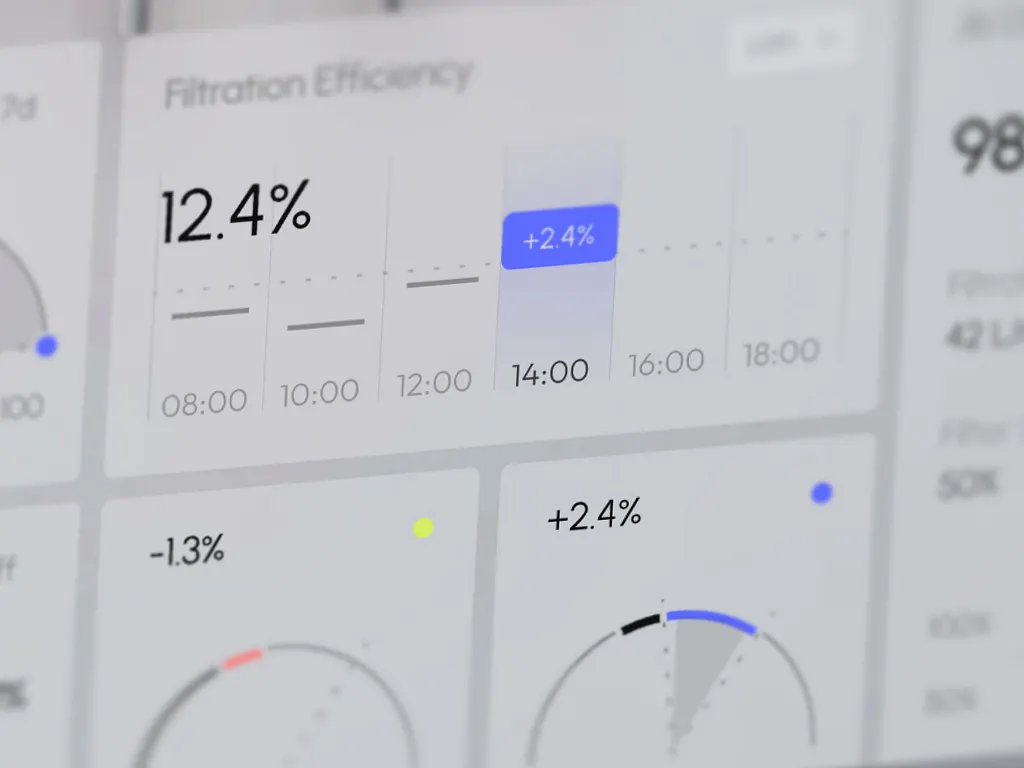
We designed a clear, visual and business-oriented web application adapted to the needs of a pharmaceutical wholesaler.
The system retrieves sensor data from the cloud through an API, then turns it into easy-to-read information for teams. Temperatures are displayed by area, with simple statuses showing quickly whether everything is compliant or whether action is required.
Alerts make it possible to immediately identify temperature deviations and improve team responsiveness. Measurement history also helps keep a record of variations and better understand incidents.
Thanks to this solution, temperature monitoring becomes faster, more reliable and easier to manage day to day.
Do you have a similar project?